I started my career as an economist. The transition to data analytics was not planned — it was a response to a problem I could not solve with the tools I had been trained to use. The organisation I was working in had data about its customers, its operations, and its market that nobody was using. I started using it. Things improved. More was asked of me. Fifteen years later I am still following that same basic pattern — finding the data that organisations are not using, and building the systems that make it actionable.
Looking back with the clarity that hindsight affords, here is what I would tell my younger self.
Domain Knowledge Is Your Competitive Advantage
The data science market is crowded with people who can build models. It is much less crowded with people who can build models that actually solve the right business problem in a specific industry. The combination of deep domain knowledge — how energy distribution works, how credit risk behaves, how network operations are managed — and analytical skill is what creates sustained competitive advantage. Do not rush to leave the domain you are in. Go deeper before you go broader.
Communication Is Not a Soft Skill. It Is the Job.
The most technically excellent analyst I have ever known was largely invisible in his organisation because he could not communicate his findings in terms that non-technical stakeholders could act on. His models were better than anyone else's. His influence was among the lowest in the analytics function. I spent years prioritising technical skill over communication skill. The career returns from investing in communication are higher, in my experience, than the returns from equivalent investment in technical depth.
The one skill I wish I had developed earlier — and that I now consider the most valuable in my toolkit — is the ability to take a complex analytical finding and express it in two sentences that prompt a specific action from a specific person. This skill takes years to develop and is worth more than any technical certification.
Build the Relationship Before You Need It
The most important professional relationships I have — the executives who trust my judgment, the peers who collaborate on complex problems, the mentors who have shaped my thinking — were built before I needed anything from them. Relationships built when you need something are transactions. Relationships built over time, through genuine interest and value exchange, are the infrastructure of a career. I invested too little in this too late.
Publish Your Thinking Early and Often
The seven books I have written have done more for my professional visibility and credibility than any job title or certification. But I wrote the first one too late — a decade into my career, when I had been developing the ideas for years. The platform I have now would have been larger and more valuable if I had started earlier. You do not need to be perfect before you publish. You need to be clear, honest, and useful. Those qualities can be present at any stage of a career.
The Work You Do Between Jobs Matters More Than the Jobs
My career has been shaped more by the projects I have taken on outside formal employment — the consulting engagements, the books, the speaking, the films — than by the positions I have held. These projects developed skills the jobs could not, created relationships the organisations could not, and built a reputation that the job titles could not convey. The most valuable career advice I can offer is to build something outside your employment. The compounding returns on that investment are remarkable.
Work With Dr. Sunny Okonkwo
Ready to deploy AI that actually changes how your organisation operates?
📅 Book a Free Discovery CallView Consulting Packages
Dr. Sunny Okonkwo
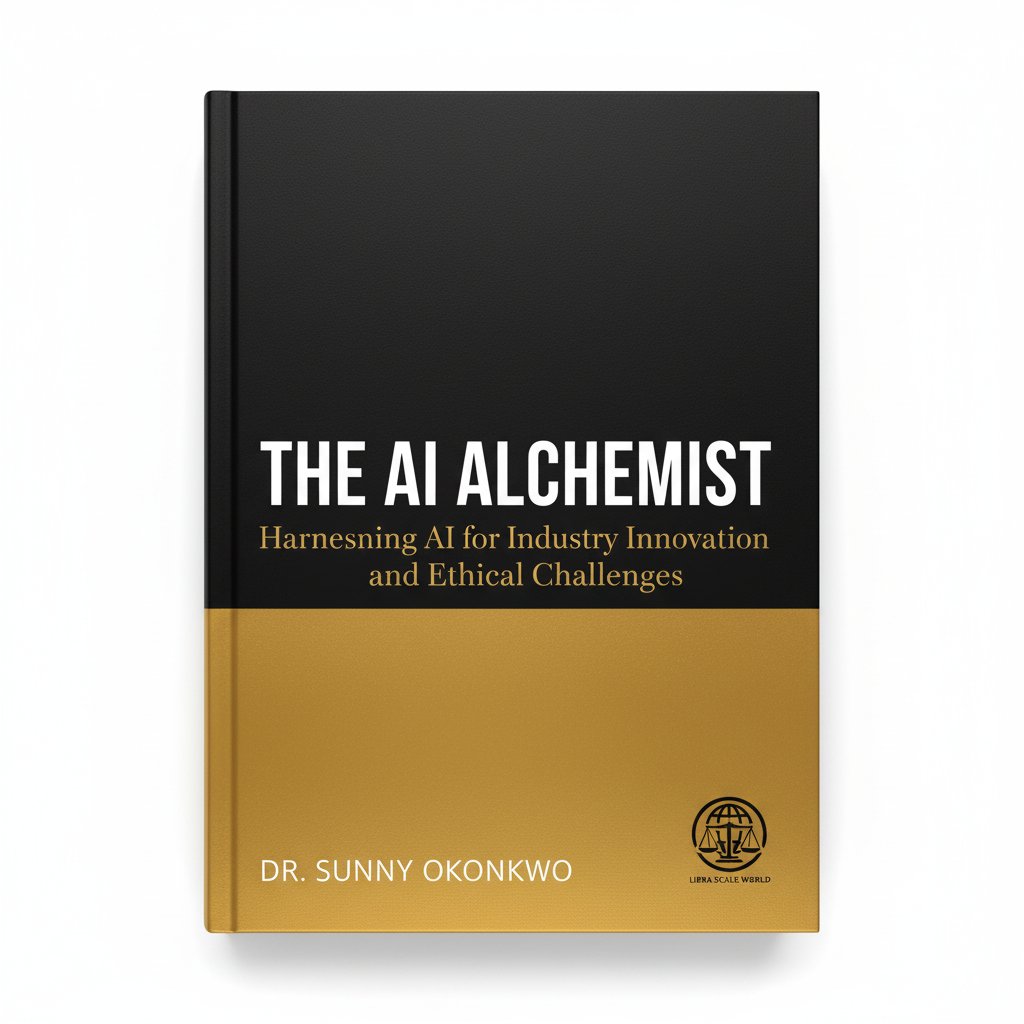
AI Strategist · Decision Intelligence Expert · Head of Data Analytics at one of Africa's largest energy and utility companies. Author of 7 books including the #1 Bestseller The AI Alchemist.