I read widely and always have. The ideas in this field come from everywhere — mathematics, psychology, organisational behaviour, economics, engineering, philosophy — and the practitioners who understand it most deeply are almost always those who have drawn from multiple traditions rather than staying within the boundaries of any single discipline.
These are the books that have most shaped how I think. I have included honest commentary on what each contributed and where, in my experience, their insights have limitations.
On AI and Machine Learning
The Alignment Problem — Brian Christian
The most important book about AI I have read in the last five years — not because of its technical content but because of its framing. Christian's central argument is that the most critical challenge in AI is not building systems that are capable, but building systems that do what we actually want them to do. The gap between specified objectives and human intentions — the alignment problem — is at the root of almost every AI deployment failure I have witnessed. The book gave me language for a problem I had been observing for years without being able to name precisely.
Weapons of Math Destruction — Cathy O'Neil
An essential corrective to the prevailing optimism about algorithmic decision-making. O'Neil documents with precision how models that are technically competent can produce systematically unjust outcomes when deployed in contexts their designers did not fully understand. This book changed how I think about model governance and made me more rigorous about requiring demographic performance analysis before any model deployment in high-stakes contexts.
On Organisations and Change
Thinking, Fast and Slow — Daniel Kahneman
The foundational text for anyone trying to understand why data-driven decision making is difficult in practice. Kahneman's documentation of cognitive biases — the anchoring effects, the availability heuristics, the overconfidence — explains more about why analytics programmes struggle to influence decisions than any amount of analytics literature. Understanding how human cognition actually works is a prerequisite for designing analytics that actually influences decisions.
The Fearless Organisation — Amy Edmondson
Psychological safety — the belief that speaking up will not result in punishment or humiliation — turns out to be the single most important cultural factor in analytical effectiveness. Edmondson's research, applied to the analytics context, explains why organisations where data findings can be challenged without consequence develop better analytical cultures than those where questioning data or findings is seen as disloyal or threatening. This book is required reading for anyone trying to build a data-driven culture.
On Leadership and Decision Making
The Decision Book — Mikael Krogerus and Roman Tschappeler
A compact reference for decision-making frameworks that I return to regularly. Not academically rigorous — it makes no claim to be — but practically useful as a source of structured approaches to decisions that can feel overwhelming when approached without a framework.
Good Strategy, Bad Strategy — Richard Rumelt
The clearest thinking I have encountered about what strategy actually is and what distinguishes it from the vague aspirational documents that most organisations call strategy. Rumelt's diagnosis — that most strategy documents are not strategies but collections of goals dressed up as plans — applies directly to most AI strategies I have reviewed. The book gave me a framework for evaluating strategic proposals that has been consistently useful.
On Africa and Development
The Shallows — Nicholas Carr
A book about how digital technology is changing how we think — and not always for the better. Carr's argument that continuous connectivity and information abundance are reducing rather than enhancing deep thinking is a useful counterweight to the optimism of the technology sector. In a field that tends toward enthusiasm about what technology makes possible, this book provides a useful discipline of asking what technology makes less possible.
The One Book I Recommend Most Often
If I could put one book in the hands of every executive wrestling with AI investment decisions, it would be Superforecasting by Philip Tetlock and Dan Gardner. The book's central finding — that prediction accuracy improves dramatically with specific, disciplined practices that most forecasters do not use — is directly applicable to the AI deployment context. The habits of mind that make good forecasters — updating beliefs based on evidence, thinking probabilistically, seeking disconfirming information — are the same habits of mind that make AI deployment successful. It is the most practically useful book I have read for the work I do.
Work With Dr. Sunny Okonkwo
Ready to deploy AI that actually changes how your organisation operates?
📅 Book a Free Discovery CallView Consulting Packages
Dr. Sunny Okonkwo
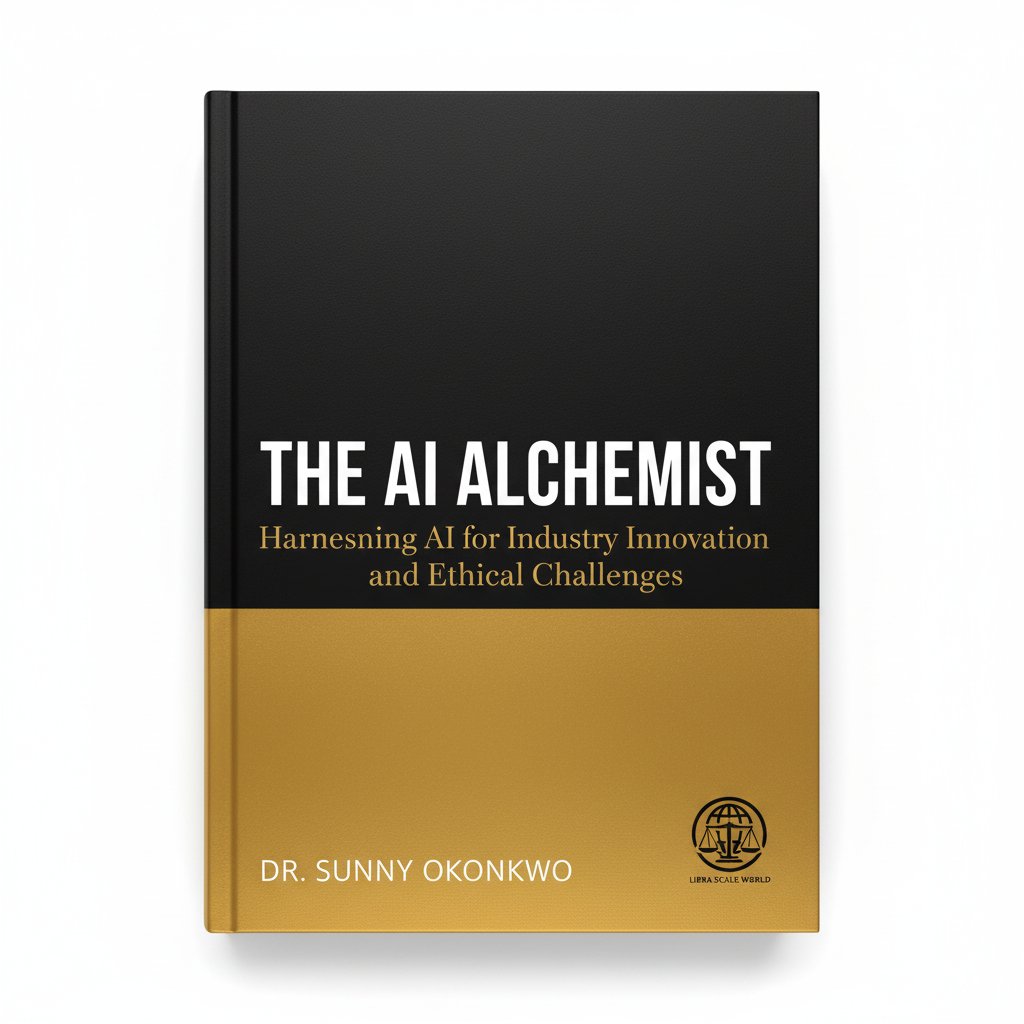
AI Strategist · Head of Data Analytics at one of Africa's largest energy and utility companies. Author of 7 books including the #1 Bestseller The AI Alchemist. Keynote speaker at IIBA, Big Data Summit Canada, Global Summit, and UNICAF.